Online college vs traditional college – what’s the difference? We’re explaining the benefits and drawbacks of both.


It used to be common for students to attend traditional, on-campus courses at a college, but this trend is changing. More and more students are seeking flexibility, convenience, and the ability to study from the comfort of their homes or anywhere in the world.
Editorial Listing ShortCode:
However, an online program requires self-discipline and is not for everyone.
Is Online College Easier than Attending a College?

No, online colleges are not easier than attending a traditional college. Online colleges require quite a bit of self-discipline, while traditional colleges require showing up for classes. You must have the will to go online and complete your studies, or they may never get done.
Benefits of online college courses:
- Access your classes from home
- Work on your studies during your break at work
- Submit assignments even while you’re on vacation at the beach
- Your classes are brought to your fingertips
Instead of attending lectures, you may be required to do more reading or other activities in your courses to make sure you are fully processing the information. So, you may need to include new study methods in your routine so that you get the most from every course.
But being able to complete your courses at your own pace means you may be able to complete your degree faster than you would in a traditional program.
What Are the Most Popular Online Degrees?
The following list contains the most popular online degrees available. Click on the one you’re most interested in to jump to that section.
- Accounting
- Business Administration
- Computer Science
- Criminal Justice
- Education
- Finance
- Healthcare Administration
- Information Technology
- Liberal Arts
- Management
- Marketing
- Nursing (RN required)
- Psychology
It is important to choose a subject that helps you achieve a specific career path.
Accounting

Students that choose accounting as their degree may pursue careers as accountants, bookkeepers, accounting specialists, or auditors.
You can expect to learn about finances, advanced mathematics, and helping businesses with their budgets.
Editorial Listing ShortCode:
A person that possesses exceptional math skills and is interested in dealing with money and funds often may be a good fit for an online degree in accounting.
The average annual salary for a graduate with an accounting college degree is roughly $71,550 (Bureau of Labor Statistics).
Business Administration

If you choose to study business administration, you may end up in various career paths, such as a financial controller, financial analyst, human resources manager, or operations manager.
These degrees may teach you how to work in a corporate setting, establish leadership skills, handle any challenges that may arise, and develop strategies for various businesses.
Editorial Listing ShortCode:
This is a great degree program for individuals interested in possibly operating or owning a small business, climbing the corporate ladder, or becoming a manager over a facility.
The average annual salary that a student with an online degree in business administration can expect to make is typically $62,000 (Bureau of Labor Statistics).
Computer Science

Computer science degrees may lead you to wonderful career opportunities, such as a software development engineer, programmer analyst, or web developer.
A program in computer science may teach you the essentials of technology, computer applications, and coding.
Editorial Listing ShortCode:
If you are a person that is intrigued by computers, technology, and would like to help companies with any technological-related issues, this may be the perfect major for you.
Online computer science degrees generally make an average of $83,000 each year (Bureau of Labor Statistics).
Criminal Justice

A degree in criminal justice may qualify you for many different job titles. For example, most graduates with criminal justice degrees pursue careers as fraud investigators, security managers, detectives and criminal investigators, or police officers.
The educational field of criminal justice focuses on teaching legal aspects, justice and security in the community, and helping with issues that usually come up in society.
Editorial Listing ShortCode:
This degree program can be an excellent choice for a person that is interested in establishing a career helping people, bringing justice to life, and developing security among the public.
The average income for online computer science graduates is around $41,580 in a year (Bureau of Labor Statistics) in the protective service field.
Education

Individuals studying education may earn jobs as college professors, high school teachers, middle school teachers, elementary school teachers, academic advisors, and administrative assistants.
An online degree in education can provide students with the knowledge to develop leadership skills, communication skills, and teaching skills.
Some education programs even allow students to choose a concentration or specialization, depending on their desired career path. For example, some students choose child development or elementary education if they want to help educate young children.
Editorial Listing ShortCode:
If a person wants to teach at the college level, they may choose post-secondary teaching as their specialization.
On average, a person with a degree in education makes about $47,000 annually (Bureau of Labor Statistics).
Finance

If you decide to pursue a degree in finance, you may find yourself in the following career paths after graduation: finance director, finance manager, business analyst, or finance assistant.
Finance degrees may teach you how to manage a company’s finances, conduct financial planning, and manage a finance team.
Editorial Listing ShortCode:
A person that possesses advanced mathematical skills, knowledge of business practices, and excellent leadership skills may do well in the field of finance.
Per year, $69,820 is the average income graduates with an online degree in finance can expect to earn (Bureau of Labor Statistics)
Healthcare Administration

This is a degree that may lead you to specific careers, such as a healthcare administrator, medical and health services manager, public health specialist, senior healthcare assistant, or pharmacy technician.
In this program, you may learn different medical procedures, how to manage clinics and other healthcare professionals, and develop an understanding of the operations of a healthcare facility.
Editorial Listing ShortCode:
A major in healthcare administration may serve you well if you are compassionate toward others, possess the ability to adapt, are a quick thinker, and are interested in managing a hospital or physician’s office.
The average annual salary that a healthcare administration online degree may make is $53,190 (Bureau of Labor Statistics).
Information Technology

A person studying information technology may plan to pursue a career as a senior systems administrator, software developer, information technology manager, network administrator, or information technology specialist.
This degree may provide knowledge on the newest technology, managing information systems, and how to research and analyze data.
Editorial Listing ShortCode:
You may be a good candidate for this online program if you enjoy working with computers and technology and gathering and analyzing data. This is an ever-evolving field, and you must be adaptable.
Graduates of online information technology programs earn on average around $83,000 each year (Bureau of Labor Statistics).
Liberal Arts


If you would like to pursue a career as an administrative assistant, project manager, executive assistant, marketing director, or office manager, a degree in liberal arts may be beneficial to you. This degree may expose you to a wide range of various subjects like history, economics, and philosophy.
Critical thinking, communication, and research are top skills that online degrees in liberal arts may teach you.
Editorial Listing ShortCode:
If you are a person that is not exactly sure what you might like to do as a career, this is an excellent degree program that can introduce you to all types of options. Most students are even able to choose their own classes, so you can choose the classes that are the most interesting to you.
The average annual salary of a person with a liberal arts degree is around $50,000 (Bureau of Labor Statistics).
Management

As a graduate of an online management program, you may seek a variety of careers, such as a human resources generalist, operations manager, office manager, director of operations, director of sales, or corporate paralegal.
This degree can provide the knowledge and skills to students wishing to manage and oversee the operations of an organization, whether it be healthcare, law, non-profit, or government.
Editorial Listing ShortCode:
Upon completion of the management program, you should be able to successfully handle any challenges that may arise as well as predict business trends. An individual that possesses people skills, able to be in charge, and is a natural leader may do well in the field of management.
The average yearly salary that you can expect to make with a management college degree is around $73,570 (Bureau of Labor Statistics).
Marketing

A student studying marketing may end up in a variety of roles, including product marketing manager, marketing director, marketing executive, or marketing coordinator.
Marketing programs teach you how to attract customers to your products and services, which increases sales.
This is a wonderful educational and career opportunity for those that possess leadership skills, are detail-oriented, enjoy research, and are interested in creating strategies to improve a company’s brand and sales.
Editorial Listing ShortCode:
Marketing is an important aspect of a company’s success because, without smart marketing, a company may not make any sales.
An average salary for a graduate with an online degree in marketing is typically around $63,790 (Bureau of Labor Statistics).
Nursing

An individual in a nursing program may go on to pursue a career as a pediatric nurse, labor and delivery nurse, director of nursing, or charge nurse.
The field of nursing focuses on hands-on techniques. Therefore, it can be difficult to find this program offered online but not impossible. Most online programs in nursing are available to students that have already earned their Registered Nurse (RN) license.
With the long hours of a nurse’s schedule, an online program option may be essential.
Editorial Listing ShortCode:
Online programs in nursing usually provide additional skills and specializations to advance in the nursing field. Becoming a nurse may be ideal if you would like to help people, provide direct care to patients, and ensure the safety and care of individuals.
The yearly average salary for nurses is $73,300 (Bureau of Labor Statistics).
Psychology

As an online psychology major, students may plan to begin careers as a human resources manager, project manager, case manager, operations manager, or executive director.
You may even continue your education and earn a graduate degree in psychology online, which could lead to becoming a clinical psychologist, forensic psychologist, genetics counselor, or marriage and family therapist.
Editorial Listing ShortCode:
Psychology courses teach the fundamentals of understanding how people think, feel, and react to specific issues. If you are a person that enjoys helping people, desires to understand others and is interested in finding solutions to arising issues, this may be a perfect degree program for you.
The starting average salary is around $48,000 for Psychology college degrees (Bureau of Labor Statistics).
Are There Any Traditional Colleges with Online Degree Programs?
Yes, there are traditional colleges with online degree programs. With the rise of students choosing to earn an education online, more traditional colleges are creating online platforms for students to use.
Students are looking more for flexibility, convenience, and self-paced programs. Therefore, traditional colleges are offering online options for students to still be able to attend college in non-traditional ways.
Is There a Difference in the Degree Between Online College vs Traditional College?
An online degree and traditional degree teach students the same fundamentals to succeed in their careers. Both degrees are widely accepted by colleges and employers. The only significant difference between the two is the way students are gaining their knowledge and skills.
With online degrees, students gain their knowledge and skills online, whereas on-campus students gain their knowledge and skills in a traditional classroom.
Is an Online College Degree a Good Idea?
Online college may be a good idea for you if you have a busy schedule or other life commitments. Most online courses can fit around a person’s life, and you may be able to log on and do your online studies at your own pace.
If you possess self-motivation and self-discipline, an online college program may work for you. You must be able to log on often and complete your assignments by the due dates.
If you are unable to commute to a college campus or are traveling often, you can access online courses from anywhere in the world with an internet connection.
An online college may or may not be a good idea; this ultimately depends on you and the responsibilities that you have in your life.
Is an Online College Degree Different from an On-Campus Degree?

An online degree differs from an on-campus degree by the place of learning. For example, students in an online program receive their education online, and students in an on-campus program receive their education in a traditional classroom.
The methods of teaching may be different, but the same lessons and assignments are given in each type of program. Your degree may state that you earned it online.
Are Online Degrees Legitimate?

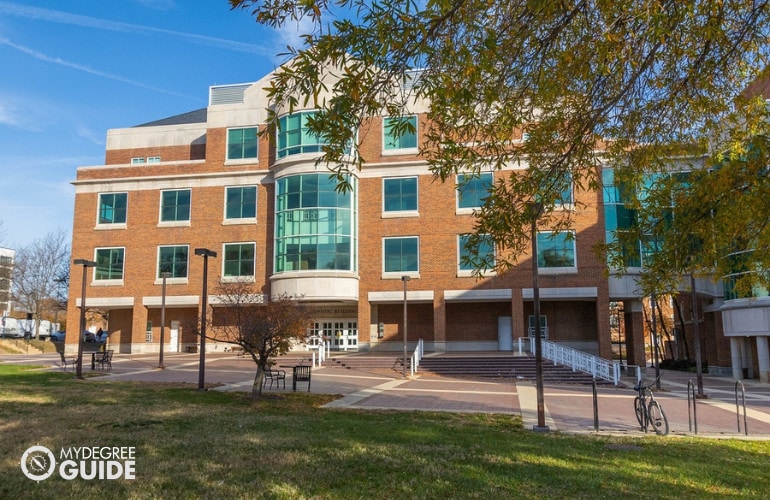
If you want your online degree to be considered by other colleges or employers, you must find a legitimate online degree. Not every online degree is reputable, which is why it is important to determine that it meets the same standards as a traditional, on-campus college or university.
Accreditation is one of the most important ways to determine if an online degree is legitimate. You should make sure before applying to an online program that it has been accredited from a real accrediting agency, whether regional or national.
If a program has received accreditation, this shows future employers and colleges that you have met the standard educational requirements to succeed in the field of study chosen.
Are Online Degrees Respected and Reputable?
Online degrees are respected just like on-campus degrees. Employers cannot tell by your degree or transcripts if you earned your degree online or not. Your degree or diploma will look the same as a person’s that graduated from a traditional, on-campus program.
The only way anyone will know you attended an online college is if you tell them.
Online degrees are becoming increasingly common, and employers are aware of students having other obligations while attending college. Instead of letting life duties get in the way of receiving an education, many students choose to take online classes to earn their degrees.
Therefore, any reputable and legitimate degree, whether earned online or traditionally, is acknowledged and respected.
What Are the Advantages and Disadvantages of Online College Degrees?


There are several advantages and disadvantages of attending an online college. Some of the advantages include a flexible schedule, no commuting for classes, no sitting in lecture classes, and being able to complete your studies at your own speed. These advantages and disadvantages are important considerations when you apply for online colleges.
Online college is convenient, especially if you have a hectic work schedule, are unable to get childcare to go to classes, or end up catching an illness.
Online courses do have some disadvantages. If you do not possess self-motivation, self-discipline, self-determination, and organization, you may not do well in an online environment.
Online courses involve logging onto the computer and completing your studies without a college professor over your shoulder. Your professor is available if you need help, but the interaction may be more limited than if you were in person.
Also, if you do not have the required technology, such as a computer or internet connection, you cannot take online courses.
What Are the Advantages and Disadvantages of Traditional College?
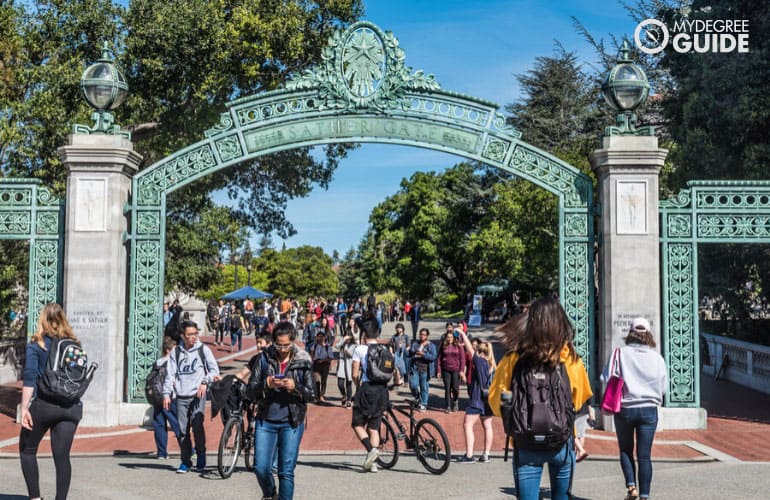
Traditional college has its advantages and disadvantages as well. Some of the advantages are a structured schedule, in-person interaction with teachers and classmates, fast feedback, and the ability to use on-campus sources like the library or computer lab.
You also are reminded in class to be prepared for upcoming assignments and tests. The disadvantages of traditional courses are inflexibility, inability to travel or miss classes, and requiring commuting to class every day.
Financial Aid for Online or Traditional College


Students around the country require some sort of financial assistance during their college careers. Students attending online or traditional college programs are provided with many of the same types of financial aid opportunities.
Regardless of which program you choose, the different financial aid sources you should look into are scholarships, state and federal grants, work-study programs, and student loans.
Start by filling out the Free Application for Federal Student Aid (FAFSA). This is a quick, simple application that the federal government requires to determine if you may receive any sort of financial assistance and exactly how much you may receive.
How Does Going to Online College Work?

Online colleges require students to have access to a computer or laptop as well as an internet connection.
Some online colleges may offer synchronous sessions, which is when students and professors meet online at a set time. This usually involves virtual lectures conducted by the professor.
However, the majority of online courses are asynchronous, which means students complete their assignments on their own time. Online colleges are more understanding of other life commitments and tasks that need to be completed, so they usually allow more flexibility than traditional colleges.
Your lectures, discussion boards, emails, quizzes, and assignments are readily available online. If you need to go back to a specific subject in the course that you may have missed, you can easily do so.
It is also important to know that interaction is more limited in an online college. For example, in a traditional college, you may work on a group project with your classmates or form study groups.
In an online college setting, your interaction usually consists of online forums, which is where you can ask classmates questions or join conversations.
Online College vs Traditional College – Which One Is Better Overall?


The education that students receive from a traditional or online college is the same quality; both offer great educational opportunities for students. Which would be better for you depends on you and your learning needs.
If you are a busy person, you should select an online program. If you require hands-on learning, you should select a traditional, on-campus program.
Once you have completed your research, you should begin applying to colleges and universities offering the specific program of your choosing.